
San francisco mural
When I originally conceived this essay, it was meant to be something in the way of a How To thing, for one of my classes, an easy to follow step by step guide on how to market your work. By the time I came to write it, though, I realized that this particular bunch of students already had that covered. And, anyway, there are lots of pieces like that. (A quick crank through Submission Grinder might be enough to get some writers started. Writers Digest has a piece on the basics, too.)
So what this became, in fairly short order, was more of an acknowledgment of something many of us realize, forget, and then learn anew over the course of our careers:
- Learning to write well–learning your craft–is hard.
- Learning to sell your work is completely different–and also hard.
- Both are lifelong pursuits with changing goalposts.
It used to be, in the days before the Internet, that the process of submitting a manuscript had an almost ritualistic air to it.
You had to produce a typed copy, of course… and if you go back far enough, that involved actually typing it on an old school typewriter. You needed a back-up, and before copy shops and the days of a laser printer in every home, that meant carbon copies. This was a pain in the ass the likes of which I cannot even describe.
Unless you had the random good fortune to live in the same city as and be buddies with your chosen editor, a mythical unicorn-like creature straight out of the pages of John Irving, who accepted prose directly from your hands and impressed it, deitybeams emanating all the while, right into the centerspread of The New Yorker, each submission had to go into snailmail, with a cover letter and something called an SASE–which means self-addressed stamp envelope. This was an envelope with enough U.S. postage on it (no matter where your country of origin was, and don’t get me started on International Reply Coupons) to pay to return your original. This in turn ensured that you didn’t have to type it again if a rejection happened to come.
If the story got picked up, the SASE was used for the contract.
There was no real way of knowing if Writers Digest was still on track when it said that a market like Tomorrow Speculative Fiction would take six months to get back to you. There was a sense of throwing your fiction out into the void to see if it might somehow, miraculously catch a yes. It was night fishing. It was slow. The most important part of many a writer’s day was watching for the mail carrier.
I came along somewhere midway between carbon copies and dot matrix printers, and so my point in telling you this is not anything along the lines of Oh, you kids have it so much better than the oldsters who founded this genre! It’s not even Hey, things are so much better now! They are, of course, at least in terms of logistics. It is much easier to get up-to-date market information, to canvas other writers about what any given editor may want, and to go to the aforementioned Grinder to find out things like the average response time for a given market.
In the end, though, it still comes down to this: your story, working its way into the unknown, trying to catch the attention of a single reader. That reader might be an overtaxed and jaded slush reader for a magazine that gets eighty manuscripts a day. It might be the agent who asked for your manuscript in person at a writing conference. The physical artifact might still exist: you may yet mail out printed Courier text on crisp white sheets of 20 pound bond. It might as easily end up being custom formatted, by the recipient, to suit whatever e-reader they keep by the bedside table at home.
There’s a metaphorical line, a reel and a piece of bait. And what hasn’t changed, between then and now, is that you are taking an immense emotional risk.
Some of us are years, even decades, from the first time we threw a manuscript out there. Some of us have reached a point where we don’t even find the process of casting our work out there particularly difficult anymore. Others will struggle every single time.
I have seen people get used enough to selling that the submission process becomes something they’re comparatively blasé about… blasé, that is, until that rejection for something they really wanted to sell hits their Inbox.
Then we remember. Oh, yeah! We’re putting ourselves out there. We’re taking risks.
Now, a thing about sticking your neck out is, of course, that you can lose. Lose badly, sometimes. The time spent writing a work of fiction is not a trivial investment. And I have seen people brought very low in the arts. There are discouragements and heartbreaks and dark nights of the soul. But the risk isn’t like casino gambling. The house is not against you. I sincerely believe there are more people hoping you will win than there are those stacking the deck against you.
So as you prepare your next submission, be it your first or your fiftieth, take time to recognize that you are doing something that is difficult, and brave, and worth applauding in its own right. Remember that there may have been a time in your life when you could not have imagined submitting your writing to a workshop, let alone a professional market. Remember that there may have been a time when you were unable to consider calling yourself a writer at all.
You are allowed to have this dream. It’s yours, and you own a little more of it every time you put words to paper, every time you research something you may later put in a story, every time you read a book or watch a movie with a critical eye even as you feed that impulse to entertain yourself. You are allowed to claw for time to make your art, and to send the finished product to people who may pay you the enormous compliment of giving you money and seeking an audience for it. Start thinking of yourself as part of the club.
And for those of you who aren’t in a space where you currently need reassurance, I say this: the day may come when you cycle back around to this emotional place I’m describing. To the precipice. There may be a future you who questions whether the risk is too great, who lacks the beautiful certainty of your now. So think of this little peptalk as a time traveler: pack it into your mental backpack, and carry it on to the future.
It’s often observed that the people who succeeding in fiction writing are the ones who just keep knocking on doors. That doesn’t mean their work is bad. Quite the opposite. It just means that they have, among other things, refused to give up on the idea of The Sale.
Practically ever essay I’ve seen on writing success talks about persistence. You’ve all seen those essays, I suspect, and the reason the point bears endless, tiresome repeating is specifically because risk takes energy. Risk gets tiring. Risk can even, when it’s day in, day out, and a lot of No mixed in with the Yes, become something of a grind.
So when writers turn out charming blog entries about how you just have to keep at it, remember that lying under the grassy green promise of those peppy essays are the ghosts of dreams, the memory of talented souls who gave up, the crawling worms that feed on the sleepless nights when we ourselves lay awake wondering if we might just be better off getting a real estate license. We’re telling you you have to keep at it or go under. And, simultaneously, we’re telling ourselves.
And this brings me to each other. In this, as in so many other things, the only people who truly get it are the people going through the same thing.
Writers workshop to receive crucial feedback for their fiction, but the other function of classes like my various workshops, and Clarion, and Odyssey, is to connect you with your fellow travelers. This is, again, an area where the Internet has been a game changer. It is possible now to have a writer’s group that will never meet in person. You can find a kindred spirit, anywhere in the world, and form a rich and lasting creative bond.
Keep making the work. Keep throwing it out there. Fish with a friend whenever you can. These are the things that are within your control, and they make it so much easier to survive those moments when the business side of this wacky, rewarding and idiosyncratic art–of giving voice to your dreams, in other words–starts to feel like you’re shouting into an abyss.



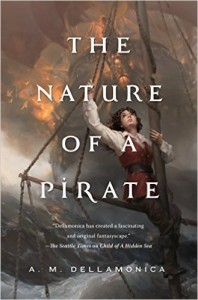 I am happy to say I am the Author of the Month this June at The Heroine Bookstore, an online venture that promotes genre works with female protagonists. There’s an interview with me at the bookstore site and, to sweeten the pot, THB is giving away copies of Child of a Hidden Sea


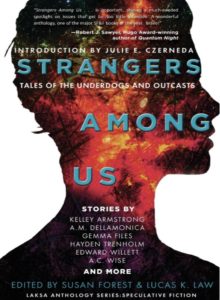
 is newly out from Laksa Media. Edited by Susan Forest and Lucas K. Law, it has stories by Kelley Armstrong, Suzanne Church, Gemma Files, James Alan Gardner, Bev Geddes, Erika Holt, Tyler Keevil, Rich Larson, Derwin Mak, Mahtab Narsimhan, Sherry Peters, Ursula Pflug, Robert Runte, Lorina Stephens, Amanda Sun, Hayden Trenholm, Edward Willet and A.C. Wise. The intro was written by Julie E. Czerneda.