95 days until Blue Magic is out!

That’s right, it’s just over three months away! You can expect to hear more as we get closer to April 10th–there will be at least one contest, and I or TOR will almost certainly put up a first chapter, and I have yet to figure out what else.

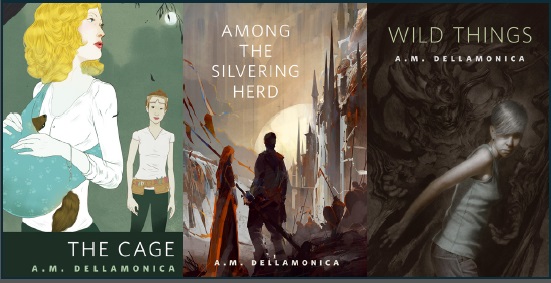
BUT WAIT, THERE’S MORE! In just a couple weeks I’ll have a new story up on Tor.com. It’s called “Among the Silvering Herd” and I hope you all enjoy it very much. Or, if you’d rather get your Whedon fan on, watch the TOR blog for my 2012 Buffy Rewatch series, coming any second now.

AND A SET OF STEAK KNIVES: there are still exactly three slots open in my winter UCLA course, “Creating Universes, Building Worlds,” which begins January 25th. Come spring, I’m scheduled to teach Novel Writing I… and I’ll let you know when registration’s open for that. Finally, I will be teaching Novel Diagnostics at the Richard Hugo House in Seattle on Sunday, January 29th from 10:00 a.m. to 4:00 p.m..

What have you all got going on?

Creating Universes, Building Worlds

This January, I will be teaching Creating Universes, Building Worlds via the UCLA Extension Writers’ Program. A full syllabus can be found here. As always, the syllabus is subject to tweaking right up until class starts January 25th… but it won’t change radically. If you want to spend Christmas getting a leg up on the reading and exercises, you can safely do so.

In April, I am scheduled to run Novel Writing One: Writing a Novel the Professional Way. Though there are no guarantees, what generally happens is that one teaches N1 in a given term, then teaches N2 in the next, N3 in the one after that, and so on. This allows students to work through the lion’s share of a book with one instructor, if they wish.

Questions? Let me know!

All the little storytales, everywhere I go…

Broken house on 2nd

A drafty snippet from the current story in progress:

It was splinters, driven into the burns. They were lined up like little dominos, bristles that ran along the lines of my hand, life line, heart line, brain line… all the things palm readers find so much meaning in. Tiny little fenceposts of bristling birch, embedded in both hands, and each filament barely aglow with the blue that had come to mean magic.

“Go to jail,” I whispered. “Go directly to jail. Do not pass go.”

And behind me, someone answered, in a deep bass voice: “Ma’am? May I have some clothes, please?”

Between writing words for the Clarion Write-a-thon (up to 16,411 words out of 20,000 as of Thursday!) and teaching “Creating Universes, Building Worlds”–which is focused on short speculative fiction–I have been trying to read a few new short stories.

So far there have been four:

1) “Crazy Me,” James Patrick Kelly – http://www.tor.com/stories/2011/05/crazy-me It’s creepy, it has great build-up, and it ends abruptly. Like many of the people who commented on it at Tor.com, I’m not sure I got the whole point; I may need to reread it. But it has been a fair while since I read anything by Kelly, and I like his style. I enjoyed this a lot.

“The Guy With The Eyes,” Spider Robinson. From BEFORE THEY WERE GIANTS, which is an anthology edited by James Sutcliffe, of first-ever stories by some well-known SF writers. I was surprised that Spider’s first published story was a Callahan’s Crosstime Saloon piece, though I’m not sure why that surprised me.

I want to pick a piece from BEFORE THEY WERE GIANTS to add to the reading list for CUBW… not this time, so much, but in the future. I love the idea of the anthology, and the right newbie story by someone who’s indisputably regarded as Genre Awesome just seems like a terrific thing to include my course reader.

(Anyone read the whole thing yet? Got any faves?)

“Down where the Best Lilies Grow,” Camille Alexa. Jessica Reisman recommended this a few days ago, and it’s a lovely little short-short–moody, self-contained, with memorable images.
(http://10flash.wordpress.com/genres/10flash-fantasy-stories/down-where-the-best-lilies-grow/)

And, yesterday, Michael Swanwick’s “The Dala Horse”, (http://www.tor.com/stories/2011/07/the-dala-horse) which has a “Little Red Riding Hood” feel but is so much more. I currently have Tanith Lee’s “Snow Drop” assigned as a fairy tale variation in CUBW; I might add this in as an optional reading, or swap them. Michael was one of my Clarion West instructors, a last-minute addition to the teaching roster after someone (I can’t remember who) had to bow out. He was, I might add, awesome.

Also on the topic of short fiction, Kris Rusch says that the prospects for writing them are better than ever, thanks to the growth of online magazines and e-books. (http://kriswrites.com/2011/06/22/the-business-rusch-short-stories/) What’s your take?

Two new essays on writing at Tordotcom

photo.JPG

Two new articles on TOR in the past week. One is the second in my sporadically-recurring series on writing about crime: it’s about thievery, the lure of the caper, and it’s called Imperfect Crimes.

The other, Tales out of School, is an essay about what it was like to start teaching SF and fantasy writing at the UCLA Extension Writers’ Program in 2005, at the height of the Harry Potter craze.

Enjoy! And let me know what you like, or don’t, or maybe even disagree with.

Revising and Marketing Short Fiction

Once you have critiques in hand from a workshop, how do you take your first-draft story and turn it into a marketable commodity? Which criticisms do you take to heart, and how do you decide which to set aside?

At every stage of the writing process, your instincts must work hand-in-hand with hard-won skills. The good news is that as you write, workshop, and revise stories, these instincts and skills will naturally improve. Practice really does make perfect! The more you read and critique the work of others while simultaneously exposing your own fiction to critique, the better you will become at polishing your work.

A reasonable plan for starting on post-workshop revision might go like this:

  1. Reread all of the critiques. Start by noting any story flaws mentioned by more than one reader–if a specific complaint arises several times, it is most likely a serious problem. Put these critiques at the top of a list of revision priorities, and spend some time thinking–without actually altering your manuscript–about how you might want to change your story to address them.
  2. Look for comments made by one or at most two readers. Figure out which you agree with and add them to your checklist. Again, take a little time once this second list is made to simply think about what you might do to answer these critiques.
  3. Third, look for areas where your readers disagreed. If half of a workshop really likes a story element while the rest hate it passionately, you are stuck making a judgment call. By this stage, however, you’ve already given some thought to the key changes you’re planning to make to your story. Those plans should help you figure out what to do about more controversial story elements.
  4. Look at line edits and minor quibbles. You can add these to the revision list or just keep them in mind.

At the end of this process, you should end up with a list of things you are going to do to the story… one that doesn’t include the criticisms you have decided to set aside.

Set that list out of sight and start revising the story. Don’t look at it again until you feel as though your draft is coming together. Then compare the work you’ve done with the list you’ve made. See which problems you haven’t addressed yet, decide whether they are still valid, and keep at it until you have–in one way or another–dealt with every item.

At this stage you should have a nearly marketable manuscript, and it is very worthwhile to do one or two more passes through the story at this stage specifically to polish your prose. (More on prose here!)

  • Look at all the dialogue and see if it flows well. Make sure characters aren’t borrowing each others’ accents or verbal idiosyncracies, that it is obvious who is speaking in every line, and that the scene’s mini-conflicts are obvious within the dialogue.
  • It’s tedious, but go through and look at all your verbs. Are they pulling their weight, or would a more vivid word choice be better?
  • See how many adverbs you can trim.
  • If the story feels wordy or long in any way, one excellent exercise is to try and cut one word or phrase from every paragraph. Doing this twice in a row can give you a nice lean prose style.
  • Use the Seem, Some, Sigh page in your Writer’s Roadmap to search for any words you may have overused.
  • Go through making note of scene breaks and important transitions. Read through those breaks and see if they can be smoothed.
  • Most importantly, print off and read the whole story aloud, marking any awkward-sounding passages with a pencil. A story should be clear and comprehensible, but if its prose can also sound beautiful to the ear, you have a winner on your hands.

Marketing

With almost all of my classes, the final assignment is to create a marketing plan for your piece–to identify a number markets that might be interested in publishing your fiction… and figuring out which of those markets to try first, second, third, etc.

Before sending out your manuscript, have a look at Vonda McIntyre’s manuscript preparation notes. Follow them scrupulously unless the specific market guidelines are different… in which case, do everything the editors ask.

Questions to ask when seeking markets for your story:

What is your chief goal in marketing the story? Are you chasing your first sale? Do you want a market that will qualify you for membership in the Science Fiction and Fantasy Writers of America? Is the pay rate a higher consideration than the relative prestige of the market? Are you willing to wait on a good market with a slow response time, or is a fast acceptance or rejection important to you?

If you have read this magazine or this editor’s anthologies before: Is your work like the fiction that appears in this market? Does the editor publish writers whose work is similar to yours?

Is the market appropriate? Does the market accept the genre of story you have written? Does it have a minimum or maximum word length? Is it on any “dead market” lists?

The Pace of Short Fiction

Novelists have a luxury that short story writers do not enjoy: they have fifty to a hundred thousand (or more) words in which to achieve their desired effect on readers. Those working with the short form of fiction labour under many of the same obligations: we have to create a universe, populate it, and paint a workable story on its canvas… but we have to do it at about one-tenth of the length. On the plus side, short story writers don’t usually have to explore the extended history of the world they are writing in, let alone generate maps! In short fiction, we rarely have to generate subplots for our stories, script extensive biographies for our principal characters, or create and educate readers in alien languages.

Many novels open slowly–they still have hooks, but a chief concern in beginning a novel-length work of SF often lies in establishing atmosphere as well as providing extensive setting and character details, giving a reader a sense of the novel’s milieu, establishing the author’s prose style, and setting out the principal symbolic and thematic elements of the piece. Stories do some of these things, but swiftly–we must introduce our story elements in a few paragraphs and then get on with the business of moving our conflict forward.

The trickiest issue in pacing short fiction, of course, is that your prose cannot seem breathless or rushed: unless you are writing an action sequence or another type of quick and choppy scene, your story has to feel unhurried; the reader must have time to breathe. Nobody wants to be quickly ushered through a plot and dropped off at its ending without so much as a wave goodbye. Somehow you have to provide a leisurely tour of your setting and a strong sense of your characters while carrying us swiftly to the story’s conclusion.

The key to the unhurried brevity demanded of short fiction is the power of suggestion. Letting small details suggest volumes about your world and its people is tricky, but it is also a technique well worth learning. Examine how various SF writers accomplish this in the assigned readings and other stories; then look at your own work and see where your strengths lie.

If you can evoke your setting with a well-placed phrase here and there, if you can help a reader understand your character’s motives with the right snatch of dialogue or telling action, you will have more words left free for critical story issues: character transitions, exposition on the trickier elements of your SF concept, and polishing your prose to make the story a seamless and suspenseful whole.

Questions to ask about pacing:

    • What is each scene accomplishing? Multitasking is the heart of fast-paced prose: if you can deepen character, advance plot, and provide setting details all at the same time, you are going to have a tightly written and entertaining piece.
    • What elements of the piece are most important? If something matters, spend the time and the necessary words to make it clear, compelling and interesting. Look for moments where the characters’ situation changes. These are the points where the narrative should slow. Imagine a spotlight shining on these key transitions in your story… now highlight what’s going on in those sections.
    • Where can you deepen your worldbuilding using suggestion, i.e. without adding huge amounts of verbiage? Are your proper nouns carrying their weight? (Connie Willis tells readers something about the universe in which her story “Spice Pogrom” takes place simply by naming the locale where it takes place the Space Station Sony.) Can you create a few interesting colloquial phrases to give readers a sense of the setting?
    • Are you reinventing the wheel? Can you make use of some of the well-understood conventions of SF and folkore to establish the underpinnings of your world and save on words? In other words, could the bloodsucking fiends of your horror story be vampires? Could the odd, long-lived folk of your fantasy story be Elves? Sometimes drawing on the existing foundations of the genre leaves space for you to spotlight the areas where your unique vision of the universe comes into play.

Plot-What’s the Problem?

Plot doesn’t pick up where characterization ends: the two are inextricable. It’s all very well to create a vibrant protagonist whom readers can relate to, but then you have to get that character into some kind of trouble. The engine that drives a short story’s plot is its protagonist’s wants and needs. Knowing your characters’ deepest desires–and why these desires motivate them–is critical.

Sparks begin to fly in fiction when characters come together–when we see them conflict, fall in love, betray each other, form alliances, and just plainly perform on the stage you’ve created for them. This can be accomplished in as little as a single scene between two characters. Most stories, though, move their conflict through a series of scenes whose tension increases incrementally until the conflict reaches its crisis and boils over.

Though an SF story’s element of the impossible certainly gives an author unique options for plot complications–few mainstream stories see a character blown out of a spaceship airlock, or trampled by a centaur–the mechanics of plotting are less affected by genre considerations than other story components like setting and character. At the heart of every story, fantastic or not, is a character with a problem: one that, for whatever reason, isn’t easily solved.

There are as many approaches to plotting a story as there are writers, but for those struggling to tighten a piece, a look at standard plot formulas can sometimes be helpful. Author Wendy Webb, for example, suggests that stories be structured using seven steps:

Hook (open with a high-impact phrase that engages reader interest)
Problem (clue readers in as to what the protagonist wants… and why s/he cannot have it)
Backfill (now that the audience is engaged, provide whatever context is required)
Complications (the protagonist encounters obstacles in his first attempts to achieve the goal.)
Action (more attempts, more failures)
Dark Moment (the goal seems out of reach… but is it?)
Resolution (The protagonist succeeds or fails, and we see the final result of his struggle.)

An alternative structure used by other writers is even simpler:

Intro (similar to hook, above)
Complication One
Resolution: Things Get Worse
Complication Two
Resolution: Things Get Still Worse
Complication Three
Resolution: Where Character Either Triumphs or Dies

Some writers find these plot bones useful in initially planning their stories. Others prefer to veer off-road, blazing their own trail through the plot jungle. Where these structures often come in useful is after you have a first draft. At that point, compare your piece with the structures provided above. Analyzing an existing draft with an eye to clarifying and strengthening the conflict will always make it stronger, and plot formulas like the ones above are useful tools in forming this analysis.

Remember, though, that the true key to plotting lies not in following a formula, but in establishing a conflict that readers can clearly identify (and identify with), bringing it to a crisis, and then resolving that crisis in an emotionally satisfying fashion. If you can pull this off, your story will be a successful work of fiction.

Questions to ask when plotting a story:

Think through your unwritten story on a scene by scene basis:

  • Does each scene advance the plot?
  • Does the conflict come into play within each scene?
  • Is it possible to increase the tension of some or all of your scenes?

Are all the elements of plot present in your draft?

  • When can the reader say, positively, that they know what forces are in conflict in your story?
  • Can they identify the moment of crisis and its resolution?
  • Are the protagonist’s actions in pursuit of her goal logical?

What emotions do your characters experience as the story progresses?

  • Is your protagonist happy, sad, anxious, or in some other emotional state when the story begins?
  • How far from this starting point is the story going to move them? (Remember that a character who is already in crisis on page one of a piece has nowhere to go but up, whereas one who is happy–or only moderately distressed–can be set up more easily for a big plunge.)

How suspenseful is your story?

  • What is it that your reader wants to know or experience?
  • Do you have a plan for balancing the need to surprise readers against the need to make your characters’ actions believable?
  • Do your characters’ actions make sense?
  • Is what is happening clear at every stage of the story?

So you wanna create a universe?

My UCLA Extension Writers’ Program course, “Creating Universes, Building Worlds,” is officially open for students this week. This is a ten-week course that runs online, available to anyone in the world (well, fifteen anyones, anyway). Classes start on June 29th and run to September.

Anyone is welcome, including students who’ve taken the class before and simply want to workshop another short story with a new group. If you have any questions, let me know.

Revision, from Macro to Micro

When I think about revision, there’s a big mental divide: I can actually see the Grand Canyon. On one side is storytelling stuff, the nuts and bolts of plot and character that I’ve talked about before, the stuff that addresses the question, does this story go?

Way over on other side of the divide is the paint job: the question of whether the language used to tell the story is, in any way, pretty. I’ve written about that, too, listing some of the qualities I expect to see in well-written prose.

This isn’t the way I usually revise, mind you. I move through a document doing both at once, at least until I’m on the last pass. But I also know when I am making a structural revision, and when I am tuning the words. The best way for a new writer to know, if they aren’t sure, might be to ask: did this change necessitate others? If I altered this one thing, in other words, did I have to go through the manuscript and work through the consequences of the change? Or did it just make the whole thing flow better?

Belaboring the point: if you decide to switch from first person present to past, you are gonna be changing a lot of verbs. Or imagine if you change your main character’s sex. If you decide to substitute ‘lazed’ for ‘languished,’ on the other hand, you probably only need check that you haven’t used six languid variations already.

The qualities of prose post I mentioned before is something of a checklist. If your prose is ungrammatical, it says, get yourself some grammar. If it’s all dialog, all the time, you might have a balance problem, so consider putting in some narrative. Now, though, I want to talk about the process of actually shaping prose.

I have the idea that polishing your prose is pretty intuitive, at least for most of us. We read aloud, or work with a printed manuscript and a pen in hand, or we just sit at the computer and tweak, tweak, endlessly tweak. The goal, speaking very generally, is to come up with something that reads well–that offers maximum clarity to the reader and also possesses some glimmers of what I’ll call poetic rhythm. After we get to the point where the story’s told and the words are doing the job, we can strive to imbue them with some specialness.

I realize this is a gross generalization. Some writers cannot work forward through a story unless or until each sentence has a bit of sparkle. But a fair proportion of writers–especially beginning writers–seem to start with figuring out how to put together a working story, and then they move on to luminous prose. (It might also be hoped that for most of us, as we get better at the former, our prose also improves at the draft level.)

For sake of discussion, let’s assume you you’ve written a nice bit of fiction: the characters are okay, the plot works, it achieves a clear emotional effect, and the fact is you can probably sell it. But you want to work on the prose, and you want some kind of roadmap on how to start. What to do?

One strategy is to work from the big to the small, the macro, in other words, to the micro.

With this approach, you start by dividing the piece into scenes, then ask yourself: do the events unfold in a logical order? What’s the imagery, and how does it fit in? Does the scene do everything I want it to?

Second, you chop the scene into emotional beats or passages and repeat the process. This is about the words, again, so you’re looking for clumsy bits, things that may toss the reader out of the narrative. You’re also checking how each thought leads into the next, because part of flow is about that–about giving the reader the information in an order calculated to achieve a specific effect. This is true whether you want to ease them through a little lump of character history or if you want to slap them sidewise with a surprise change in in direction.

The above stages are a bit like prepping to paint a room. You’re getting major obstacles out of the way: in a sense, you’re washing and taping your walls.

After passages, naturally enough, we get to painting our paragraphs. Does each accomplish what it’s meant to? Are there any sentences that echo each other, creating wordy redundancies? How do they sound when read aloud? Does the first sentence flow logically from the closer of the paragraph preceding it?

You can probably see where I am headed now. After the paragraphs, you work the sentences. Are they varied, or do they all have the same Character verbed the Subject structure? And after the sentences, you work the words. That means all the lovely fiddly things we think of as perfecting the piece: pruning the adverbs, making sure the pronouns aren’t ambiguous, looking for stronger verbs.

Long, time-consuming, fiddly? Perhaps. If you’re pretty sure you can sell the piece anyway, go on and send it to market, and see what happens. This is one of those exercises that can wait until you feel like a stretch.

Does anyone else do it this way? Your revision thoughts are always welcome.

A web is a concrete accomplishment

I’ve been looking through my cobweb photos from Burnaby Lake, all of which, incidentally, are spider free. It’s all threads and plants and water drops. There were so many I had to divide the upload into two batches, one of fragments and close-ups, another of whole webs, like this one.

Whole cobwebs

A web, I can’t help noticing, is work. It’s a finished thing, purchased with life and effort. The orb weavers eat their webs each night and spin them anew in the early hours of the day, I’ve read. And I’ve been thinking about that as I look at the pictures, and simultaneously work through a bit of teaching work. I am in the early stages of Creating Universes, Building Worlds, which is the first UCLA class I ever developed. It’s a short fiction workshop, all SF/F/H, and the thing that stands out about my current group is how well read they are. I’ve had classes that know from Asimov and Bradbury, Herbert and Rowlings… and almost nobody else. But this month I’m hearing them talk about Marion Zimmer Bradley and Kelley Eskridge, too, Octavia Butler and Charlie Stoss and Elizabeth Bear, people from all over the genre map. It’s exciting; I can’t wait to see what they come up with as their stories develop.

In the winter–which means January–I am teaching Novel II again and come spring it’ll be Novel III, the latter for the first time. My mind is full of teacher stuff for all three courses: interesting challenges for the Creating Universes folks, what do I want to do better with the Novel II class (last time I taught it was my first, so there’s lots thought and feedback and potential tweaking), and how do I want to structure Novel III?

I work on one class, set up another plan a third. Different cycles, no web-eating, less easily quantified results, but it’s perhaps not a wholly unrelated process.